
Why Everything Feels Like It's Moving Too Fast
A 1972 novel predicted exactly why you're always rushed.

TODAY’S MINDBENDER
On average, these have 40 times more bacteria than a public toilet seat.
I’ll have your answer coming up.
The Cost of Convenience
I’m reading a novel about people who have survived a nuclear holocaust, a cataclysm that wiped out most of civilization. Robert Merle’s “Malevil” was published in 1972, so you can imagine how dated much of it is.
But I’m loving it. The story is fascinating, the kind that leaves you wondering, “How would I have managed in that situation?”
I stumbled across a paragraph that made me stop and think. He was talking about how, after the disaster, time seemed to move much more slowly.
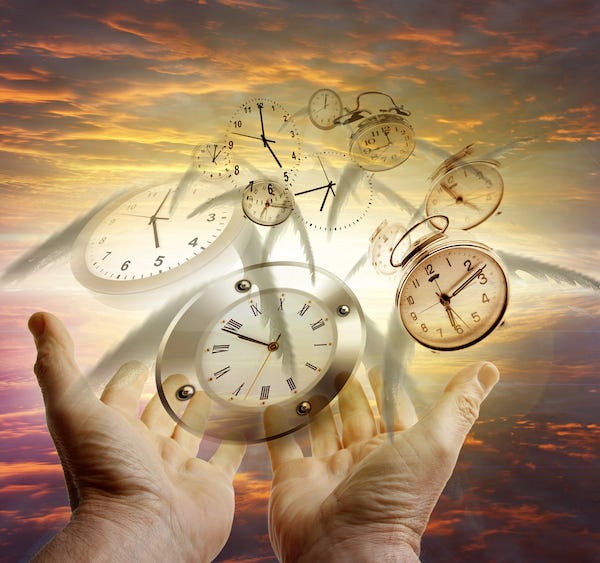
And odd though it sounds, although the days still had the same number of hours as before, they seemed infinitely longer. What it meant, in fact, was that all those machines that were supposed to make tasks easier—automobiles, telephones, tractors, chainsaws, chaff cutters, circular saws—well, they did make them easier, it’s true; but they also had the effect of speeding time up. We always wanted to do too many things too quickly. The machines were always there behind us, snapping at our heels to keep us on the move.
That rings so true to me. And if “the machines” were speeding up time in 1972, imagine the difference now. Think of every new “machine” we have that the author never even imagined:
Home computers. Mobile phones. The internet. Streaming services. AI.
I’d never considered that convenience alone shifted our perception of time, but of course it would. When you’re cleaning out the garage or doing some other menial task, time drags.
Yet sit down and stream two or three episodes of your favorite shows and the evening zips by in a flash.
Maybe the author’s most startling observation was about relationships. Specifically, how we never really get to know people in our sphere:
Even though he was my closest coworker for all those years it was almost true to say I didn’t know him. Or worse still, I knew him just well enough to make the best use of him.
For several years, I’ve wondered why certain friendships haven’t seemed nearly as strong as they did in the 1980s, 90s, or even the early 2000s. Could it be that the attention we shower on our modern machines is the primary factor?
When everything moves faster, depth is the first casualty. Or, as Merle said, “With life being lived at a pace like that, how could human relationships possibly compete?”
We have become so reliant upon our machines that—short of a disaster—we’ll never part with them. I’m not even saying we should.
It’s just that everyone talks about how quickly time is passing.
Now we might know why.
Note: If you’d like to read it, finding this book—translated from the original French—will be a challenge. I had to get a used paperback copy from eBay. Good luck. It’s worth it.
The Answer For Today’s Mindbender
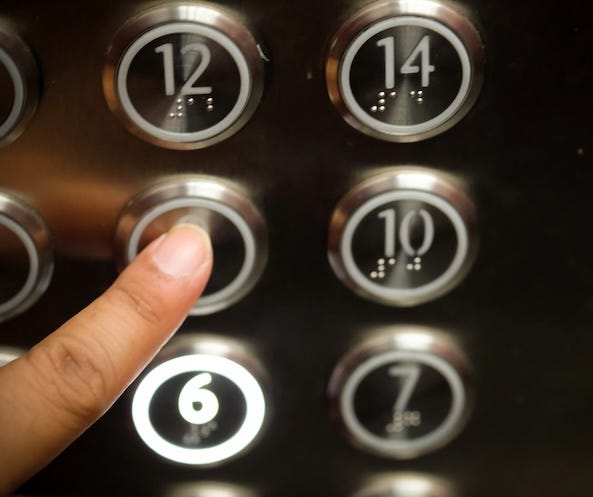
What has 40 times more bacteria than a toilet seat?
Elevator buttons
Time to start pushing them with your elbow.
Well, if you’ve got good elbow control.
Thank you for being part of the MB Club. Enjoy your day!
Dom
If everybody was so smart, why didn't they know what would happen?
Wow, your thoughts on time speeding up and those quotes really made me think. I love how he described them as snapping at our heels -- so brilliant!
I have often said that the first and largest casualty of the "modern " age is the Human Community. Human interaction has gone so far by the way side, I think it's SCARRY!!!